
Italy
Into Italy: the class is 1IM, the sailing is short.
Hotel furniture from Türkiye enters Italy duty-free on an A.TR movement certificate, inside the EU–Türkiye Customs Union. Italian hotel specifications require upholstered furniture and mattresses in Classe 1IM under DM 9 April 1994, tested per UNI 9175 on the build-up, and we quote against it per specification. DFDS's published Pendik–Trieste Ro-Ro crossing is about 64 hours, and a Turkish forwarder publishes 3–4 days İstanbul to Milan by road.
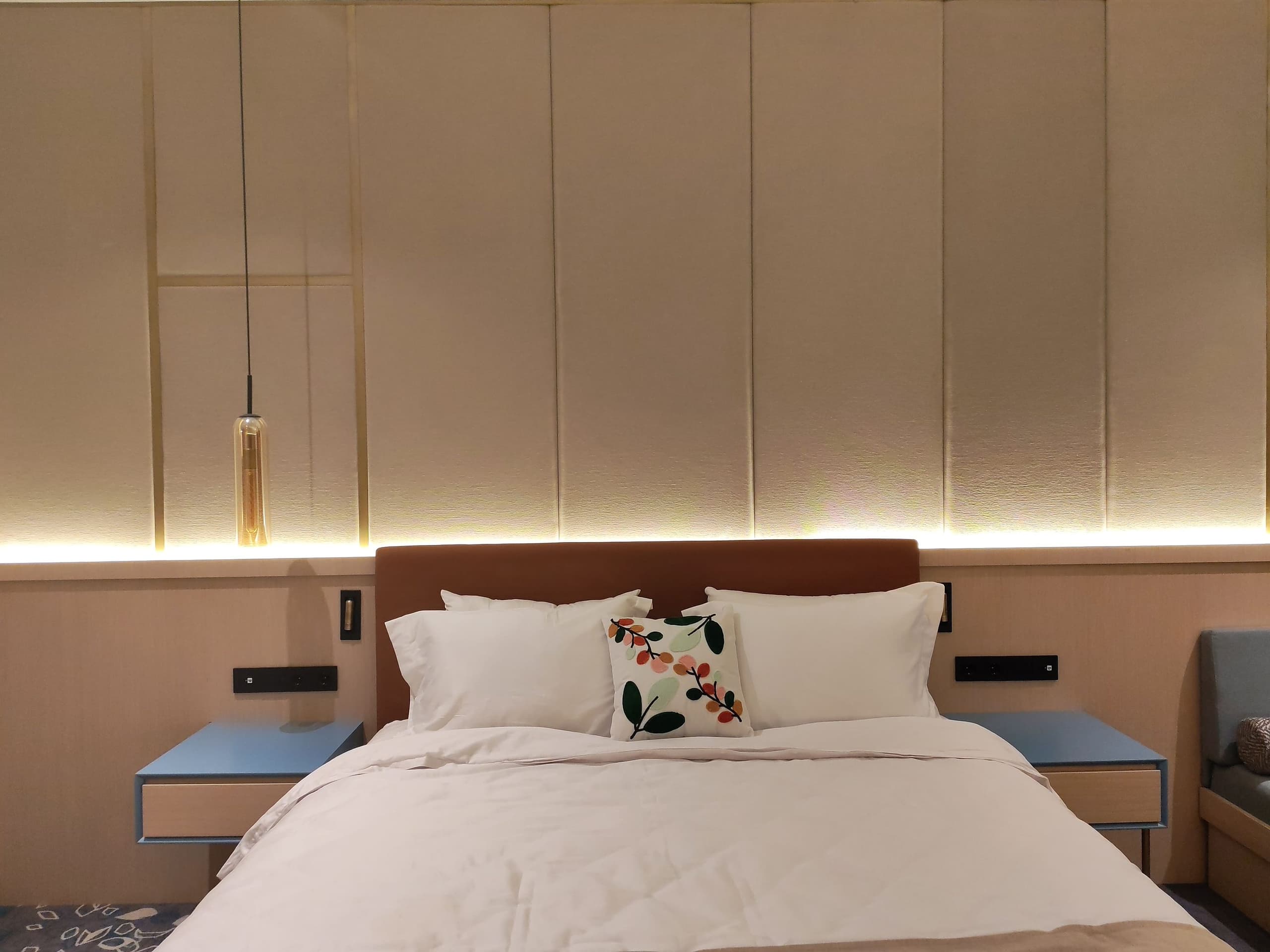
We manufacture hotel interiors in Gemlik, Bursa — guestroom casegoods, architectural joinery and upholstery, with soft furnishings and lighting supplied in the same package and installation managed by us on site. Italy is the giant of European furniture, and its industry's own numbers are in our published comparison of Türkiye, Portugal and Italy. This page is the practical file for the Turkish route into an Italian project: the duty position, the 1IM fire class, and a freight leg measured in days.
The border, settled
Duty-free on an A.TR
Hotel furniture is industrial goods and moves inside the EU–Türkiye Customs Union on an A.TR movement certificate, raised per consignment, approved by the chamber in Gemlik and vized electronically by Turkish customs. It enters Italy duty-free, wherever the board and the hardware came from.
Free circulation is not origin
An A.TR does not prove the goods are Turkish; it proves they are in free circulation. Where a content rule, a trade-defence exposure or your own onward re-export needs origin, the document is a certificate of origin, and we raise one on request. Ask for origin by name when origin is what you need.
Import VAT at the standard rate
Duty is zero on the A.TR, so the entry's number is Italian import VAT at the standard rate of 22 per cent (Agenzia delle Entrate). Who files it and how the payment is structured belongs to your broker's side of the table; we support the entry with the A.TR and the commercial documents behind it.
EUDR from 30 December 2026
The EU deforestation regulation reaches furniture on 30 December 2026. The due-diligence statement is the importer's to lodge, and it cannot be lodged without harvest-plot geolocation for the wood in the product — data that has to come from the manufacturer, so we are building it now. (Verified 5 August 2026 against the Commission's EUDR pages.)
The freight leg, in published numbers
A Ro-Ro to Trieste, on DFDS's published schedule
DFDS runs Pendik–Trieste with six sailings a week in each direction and a published crossing of about 64 hours; Yalova, Martaş and Mersin departures to Trieste sit on the same published network. The pages are DFDS's own and undated, so the sailing is confirmed when the programme is priced.
By road, on one forwarder's published band
A Turkish forwarder publishes 3–4 days İstanbul to Milan and 4–5 to Rome or Naples, routed Bulgaria, Serbia, Croatia and Slovenia, entering Italy at Trieste (Fatih Group Logistics, undated). That is one company's band, not an index, so the number that goes into your programme comes dated from the forwarder.
By container, on a direct rotation
CMA CGM's BORAMED rotation calls Trieste, Ravenna, Ancona and Venice directly out of Gemlik, per the Luka Koper sailing list read on 5 August 2026. The rotation is published; a current transit day-count is not, so we do not quote one.
What the schedule is built on
Containers are loaded in installation sequence and labelled by room number, so the site starts fitting from the first container instead of waiting for the last.
Classe 1IM, by decree
Italy classifies upholstered furniture by its own test: UNI 9175, a small-flame test run on a mock-up of the actual build-up — filling, interliner and cover — yielding classes 1IM to 3IM under the ministerial decree of 26 June 1984. For hotels the requirement is written into law: DM 9 April 1994, the fire-prevention rule for tourist accommodation above 25 beds, states that upholstered furniture such as armchairs, sofas and mattresses must be class 1IM. Name 1IM in the specification and the build-up is engineered and evidenced against it, on the approved composite; substitute the fabric and the evidence lapses. (Verified 29 August 2026 against the decree text and Istituto Giordano's published guidance.)
Fire-rated upholstery: how it is actually evidenced →Türkiye, Portugal or Italy: the comparison, published →
Working language
Correspondence runs in English; Turkish, Arabic and Russian are also working languages on our side. Drawings need no language: send the CAD set and the specification as they are, and the reply comes back in English with the questions numbered.
Who does what at the border
You or your customs agent are the importer of record; we quote DAP to the named place. Union Customs Code article 170(2) requires the declarant to be established in the Union, so the entry legally sits on your side, and we support it with the A.TR, the commercial documents and the answers your broker asks for. We manufacture, export-clear at Gemlik, carry the freight, and manage the installation through to a finished room.
How an Italian project runs
BOQ and drawings
Your bill of quantities and the architect's drawings, in whatever form they exist.
Standards named up front
Fire class, ignition sources, strength level — fixed before production, because they are build-up decisions.
Model room
Built and approved before the line opens. Eight model rooms are in our showroom in Gemlik.
Production and QC
Under our own production management in Gemlik: machining, veneer, finishing and upholstery in one building.
A.TR and delivery
The certificate raised per consignment, containers sequenced and labelled by room number, DAP to the named place.
Installation
Managed by us on site, through to the punch list.
Common questions
- Do we need a EUR.1 for Italy?
- No. For any EU member state the instrument is an A.TR movement certificate: hotel furniture is industrial goods and moves duty-free inside the EU–Türkiye Customs Union. EUR.1 is for FTA partners outside the Customs Union, such as the UK and the Western Balkans.
- What duty will we pay?
- None — the A.TR settles it. The number that does land on the entry is Italian import VAT at the standard rate of 22 per cent; how it is filed and financed is your broker's mechanics, and we support the entry with the documents behind it.
- How long is the freight leg?
- DFDS's published Pendik–Trieste Ro-Ro crossing is about 64 hours, six sailings a week each way; a Turkish forwarder publishes 3–4 days İstanbul to Milan by road; and CMA CGM's BORAMED rotation calls Trieste, Ravenna, Ancona and Venice direct from Gemlik, with no published day-count. The number in your programme comes dated from the forwarder.
- Where does a Turkish factory fit on an Italian project?
- For capacity in a fixed window, and as a second bench beside an Italian house on a programme that cannot afford a single point of failure. Duty into Italy is level, zero on the A.TR, and the freight leg above runs in days on published schedules. The full comparison of Türkiye, Portugal and Italy is published with each industry's own numbers.
- Can you meet Classe 1IM?
- Name it in the specification and the build-up is engineered to meet it, with test evidence produced against the approved composite. Fire performance belongs to the build-up — this foam, this interliner, this fabric — not to the company, so it is decided at material approval and lapses if the fabric is substituted.
- What are your lead times?
- Set per project against scope and materials, and fixed in the offer together with the delivery date.
Send the BOQ.
A bill of quantities or a drawing set is enough to start. We come back with the scope we cover, the standards we would specify against, and what the first room takes to build.