
United States
Casegoods from Türkiye land in the US at 12.5%.
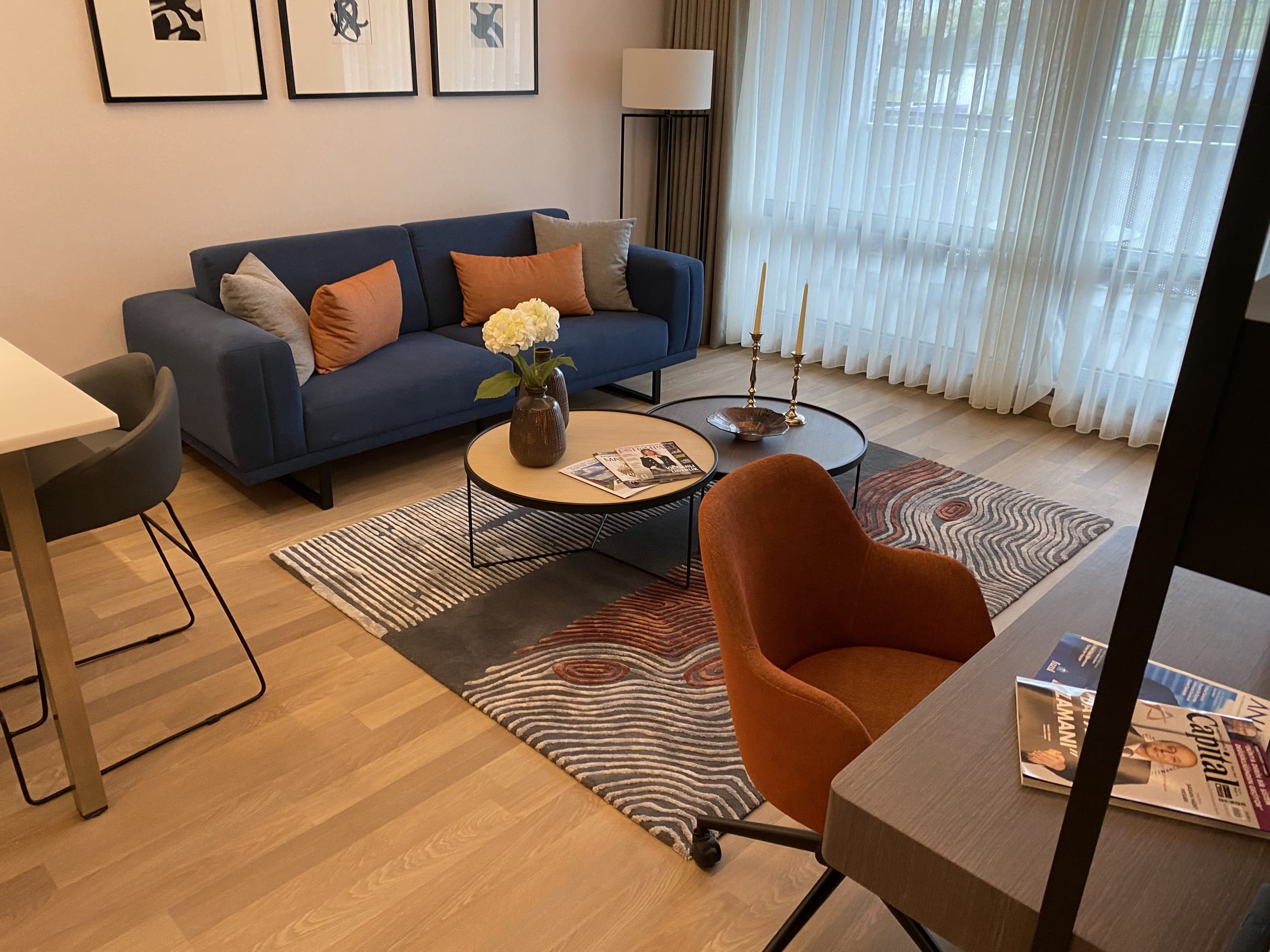
We manufacture hotel interiors in Gemlik, Bursa — guestroom casegoods, architectural joinery and upholstery, with soft furnishings and lighting supplied in the same package and installation managed by us on site. For a US buyer the first question is landed cost, so this page answers it by HTS line, with the date the figures were verified and the name of the party who files the entry.
What the duty actually is
Furniture from Türkiye pays one of two add-ons, and which one depends on the ten-digit line, not on the six-digit heading. Every figure below is duty only, verified against HTSUS Revision 15 on 5 August 2026.
| Product | HTS lines | Total today | 1 Jan 2027 |
|---|---|---|---|
| Wooden casegoods — wardrobes, desks, bed surrounds, dressers | 9403.50, 9403.60 | 12.5% | 12.5% |
| Upholstered wooden-frame seating | 9401.61 | 25% | 30% |
| Teak-framed upholstered seating | 9401.61.20 | 12.5% | 12.5% |
| Bathroom vanities and fitted cabinets | 9403.40, 9403.60.8093 | 25% | 50% |
| Metal furniture, general | 9403.20, 9401.71, 9401.79 | 12.5% | 12.5% |
| Mattresses | 9404 | 12.5% + 20.03% AD | — |
The two duties do not stack
A line subject to the Section 232 wood action is excluded from the forced-labour Section 301 by U.S. note 52(f)(4). A product pays its Section 232 rate or the 12.5%, never both. Suppliers who add them together are quoting a number that does not exist.
Casegoods are outside the Section 232 wood action
That is the whole US argument for a Turkish casegoods programme. The same lines from China carry 37.5% or more.
Metal furniture pays 12.5%, not a metal-content rate
The metal-content mechanic ended on 6 April 2026 with Proclamation 11021. Only steel shelving, steel racks and metal furniture parts remain listed. A quote priced on steel content value is priced on dead law.
A mattress is its own problem
Antidumping order A-489-841 sits on top of the 12.5% at 20.03%, and it was continued on 31 July 2026. Ask your broker for the exporter-specific deposit rate before it enters a budget.
Duty is not the landed cost
The Merchandise Processing Fee runs at 0.3464% of value and is capped per entry; the Harbor Maintenance Fee, freight and inland delivery are separate lines. We itemise all of them.
Why we date every figure
The 12.5% is a Section 301 action effective 24 July 2026 and is under three separate challenges at the Court of International Trade. As of the verification date above, none had been enjoined and CBP was still collecting. The 1 January 2027 step-ups have been delayed once already and have an explicit escape hatch for countries that reach an agreement with the United States. So we give you a figure with a date on it and re-check it before it enters an offer, rather than publishing a rate card that quietly goes stale.
Who does what at the border
You are the importer of record; we are not, and we do not claim to be. A company not incorporated in US customs territory can only enter merchandise with a resident agent in the state of the port and a nonresident bond, and with the tariff regime moving this fast, a DDP price would move between the quote and the clearance. So we quote DAP to the named place, itemised per line with the HTS classifications we believe apply and the duty arithmetic behind them. Your broker files the entry and owns the classification call — which is the right home for it, because a bathroom vanity read as a casegood is 12.5 points today and 37.5 points from January 2027, and the person who defends that reading to CBP should be the person who made it.
The paperwork a US buyer's QA will ask for
Upholstery flammability
16 CFR 1640 adopts California TB 117-2013 as the federal standard for everything made or imported since 25 June 2022. No third-party lab is mandated and no General Certificate of Conformity is required — the permanent label is the declaration, and its wording is fixed: “Complies with U.S. CPSC requirements for upholstered furniture flammability.”
No mandated test is not no evidence
A reasonable basis that the components pass TB 117-2013 still has to exist. We hold it as a build-up evidence file — this foam, this interliner, this fabric — because fire performance is a property of the composite, not of the company. Change the fabric and the basis changes with it.
Panel formaldehyde
Under 40 CFR 770 the panel producer certifies to TSCA Title VI; the fabricator labels the finished goods with its name, the production month and year, and a TSCA Title VI compliance statement, and retains the records for three years. That discipline is ours and it is the part your QA audits.
Contract seating strength
Ask for a strength and durability report and you are asking for a second, separate spend from a fire report. Name the standard in the specification and it is engineered and tested to it; a report is issued against the approved build-up, not held on a shelf.
How a US project runs
BOQ and drawings
Your bill of quantities and the architect's drawings.
Classification early
We propose the HTS lines with the quote, your broker confirms them, and the landed number is built on a confirmed classification rather than an optimistic one.
Standards named up front
TB 117-2013 labelling, TSCA Title VI, any contract strength standard — fixed before production, because they are build-up decisions.
Model room
Built and approved before the line opens. Eight stand permanently in our showroom in Gemlik.
Production and QC
Under our own production management in Gemlik.
DAP delivery and installation
Sequenced containers labelled by room number, your broker clears the entry, and installation is managed by us on site through to a finished room.
Common questions
- What duty will our guestroom casegoods pay?
- 12.5% as of 5 August 2026. Wooden casegoods in 9403.50 and 9403.60 are not in the Section 232 wood action; they carry the Section 301 forced-labour rate instead. The same lines from China carry 37.5% or more.
- Do the Section 232 and Section 301 duties stack?
- No. U.S. note 52(f)(4) excludes goods subject to the Section 232 wood action from the forced-labour duty. A product pays one rate or the other, never the sum.
- Why does a bathroom vanity cost more duty than a dresser?
- Vanities and fitted cabinets sit in the Section 232 lines at 25%, rising to 50% on 1 January 2027. A freestanding dresser is a casegood at 12.5%. The ten-digit statistical suffix decides it, which is why the classification call belongs with your broker and is worth real money.
- Is metal furniture hit by the steel tariffs?
- General metal furniture and metal-frame seating are outside the live Section 232 metal scope and pay 12.5%. Only steel shelving, steel racks and metal furniture parts remain listed. The old duty on metal content value ended on 6 April 2026.
- Can you quote DDP?
- We quote DAP. Acting as importer of record would require a US resident agent and a nonresident bond, and with the tariff regime changing this often, a DDP price moves after the quote and before clearance. DAP with a per-line landed-cost breakdown gives you the same transparency and leaves the clearance risk where it can be managed.
- Do you supply fire certificates for US upholstery?
- For the US market the requirement is a label, not a certificate: 16 CFR 1640 adopts TB 117-2013 and mandates no third-party test and no General Certificate of Conformity. We apply the required label wording and hold the build-up evidence behind it. If your specification also calls up CAL TB 133 or a contract strength standard, name it and it is engineered and tested to that.
- Have you delivered in the United States?
- Not yet. Our delivered programmes are in Saudi Arabia, Serbia, Georgia and Türkiye, and we would rather say so than let a flag imply a customs history we do not have.
- What are your lead times?
- Set per project against scope and materials, and fixed in the offer together with the delivery date.
Send the BOQ and the HTS lines.
A bill of quantities or a drawing set is enough to start. We come back with the scope we cover, the classification we would propose, and the landed number line by line.