
Capability
Fire performance is tested on the build-up, not on the company.
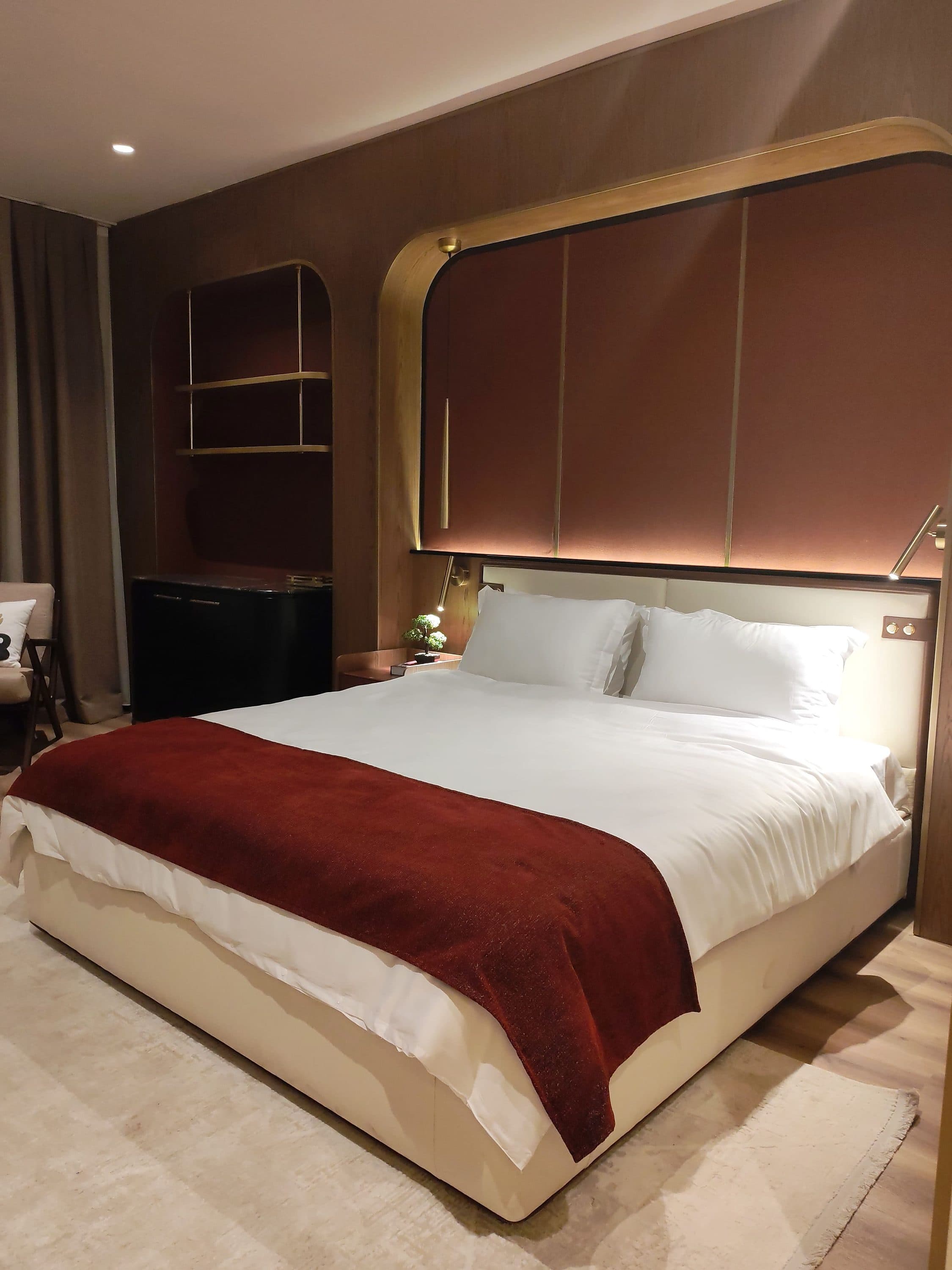
Every hotel specification names a fire standard, and most suppliers answer it by sending a folder. That answer is wrong in a way a procurement audit will find: in contract upholstery the certificate belongs to the composite — this foam, this interliner, this fabric, in this construction — and not to the factory that assembled it. Change the fabric and the evidence no longer covers the build. This page sets out what each market actually requires and how the standard gets engineered in rather than bought off a shelf.
The four consequences of that one fact
A standing certificate pack is the wrong object
A supplier who sends you a ready-made pack is sending certificates for build-ups nobody on your project specified. The right answer is the reverse: you name the standard, the build-up is engineered to meet it, and the evidence is produced against the build-up you approved.
Cost scales with fabric count, not with order size
Testing is priced per composite and per ignition source. Four fabrics in an FF&E package is four times the test bill whether the order is forty keys or four hundred. It is worth rationalising the fabric schedule before it is frozen — and it is the cheapest saving available on the whole package.
Change the fabric, and the evidence lapses
A late substitution — a fabric discontinued, a colourway swapped at the client's request — invalidates the evidence for that piece. Substitutions get re-approved against the standard, not waved through, which is why they belong in the schedule rather than in a phone call.
Bedrooms and public areas are not the same specification
Category tables put hotel bedrooms at medium hazard, but public-area and bar seating in the same property is routinely specified higher. Read the FF&E specification rather than the category table; the two disagree more often than they agree.
What each market asks for
Four regimes, four different objects. Naming the right one in the first meeting is most of the credibility available in this conversation.
United Kingdom — BS 7176
A hotel bedroom is medium hazard: EN 1021-1 (cigarette) and EN 1021-2 (match), plus BS 5852 ignition source 5 — a 65 mm wooden crib. Worth knowing precisely: BS 7176 compliance is a manufacturer's declaration supported by test evidence on the composite as built. It is not a certificate issued by a body, and a specifier who asks for “the BS 7176 certificate” is asking for something that does not exist in that form.
European Union — EN 1021
EN 1021-1 and EN 1021-2 are the cigarette and match ignition tests and form the baseline. A water-soak pre-treatment (EN 1021 Annex D, BS 5852 Annex E) is a separate, separately priced line and is specified where the piece will be cleaned wet.
United States — 16 CFR 1640
The federal rule adopts California TB 117-2013 for everything made or imported since 25 June 2022. No third-party lab is mandated and no General Certificate of Conformity is required — the permanent label is the declaration, with fixed wording. That is not the same as no evidence: a reasonable basis that the components pass still has to exist, and we hold it as a build-up file. CAL TB 133 or ASTM E1537 appears as a contractual add-on for public-area seating, never as the baseline.
Saudi Arabia — SASO 2663
Upholstered pieces need certification to SASO 2663/2019, and the consignment clears through SABER on a product certificate plus a shipment certificate. As everywhere else, the certificate is issued against the approved build-up — so it is decided at material approval, not at the port.
A strength report is not a fire report
They are different standards, different laboratories and two separate spends, and buyers routinely discover the second one late. Seating strength and durability is EN 16139, which replaced EN 15373 and was reissued on 23 July 2025 with two use levels rather than three — quoting EN 15373 in a 2026 specification dates the document. Non-domestic tables are EN 15372:2023. These tests are destructive: the sample chairs are consumed, so the units themselves are part of the bill. Naming both standards while the specification is still open costs nothing; naming the second one after the fabric schedule is frozen costs a round of testing.
How it runs on a project
The standard is named in the specification
Yours or ours, but written down — the hazard category, the ignition sources, and whether a water-soak pre-treatment applies.
The build-up is engineered to it
Frame, foam, interliner and cover chosen as a composite that can meet the named standard, in our own upholstery department rather than through a trim subcontractor.
The fabric schedule is rationalised
Before it freezes, because every additional composite is another test. This is where the money is.
Samples and the model room
Materials approved, then the room built and approved, and only then does the line open.
Evidence against the approved build-up
Testing arranged on the composite as approved, and the documentation issued against it.
Substitutions re-approved, never waved through
If a fabric goes out of stock mid-programme, the replacement returns to step two.
What we do not claim
We do not publish a certificate number, a test report or a laboratory accreditation on this page, and we will not send you a pack that predates your specification. Fire evidence is produced per project against the build-up you approve, and the scope of accreditation on any report is a question we answer in writing for your project rather than assert on a web page. A supplier who is vague about this is a supplier whose folder will not survive your audit.
Common questions
- Can you meet Crib 5?
- Name it in the specification and the build-up is engineered to meet it, with the evidence produced against the approved composite. Crib 5 is BS 5852 ignition source 5, and in a BS 7176 medium-hazard package it sits alongside EN 1021-1 and EN 1021-2.
- Can you send your fire certificates?
- Not as a standing pack, because one would not mean anything on your project. Certificates in contract upholstery are issued against a composite — a specific foam, interliner and cover. Send the specification or the fabric schedule and the evidence is produced against what you actually approved.
- Is BS 7176 a certificate?
- No, and this catches people out. It is a manufacturer's declaration supported by test evidence on the composite as built. There is no issuing body handing out a BS 7176 certificate.
- Does a US project need a fire certificate?
- No. 16 CFR 1640 adopts CAL TB 117-2013 and mandates neither a third-party test nor a General Certificate of Conformity; the permanent label with its fixed wording is the declaration. The evidence behind it still has to exist, and we hold it as a build-up file.
- We changed a fabric after approval. What happens?
- The replacement is re-approved against the named standard before it goes into production. A substitution changes the composite, and the composite is what the evidence covers.
- Why is our fire testing bill so large?
- Almost always because the fabric schedule has more combinations in it than the design needs. Testing is priced per composite and per ignition source, so rationalising the schedule before it freezes is the cheapest saving on the package.
- Do you also cover strength testing?
- It is a separate standard and a separate spend — EN 16139 for seating, EN 15372:2023 for non-domestic tables — and destructive, so the sample units are consumed. Name it with the fire standard and both are engineered in together.
Send the specification and the fabric schedule.
Name the standard and the hazard category, and we come back with the build-up we would engineer to meet it — and with the combinations worth rationalising before the schedule freezes.