
Reference
When the flag comes off: what the room keeps
When a hotel leaves a flag, the guest room keeps its carcasses, its joinery, its bed bases and its seating frames; what changes is the soft goods and the pieces that carried the brand's identity. A soft brand keeps most of that too: Marriott's Autograph Collection contract lets a hotel “retain or create and utilize its own name, logo, and brand concept”, and in the same document makes 80% to 90% of the cost of establishing the hotel subject to Marriott's standards or approved suppliers.
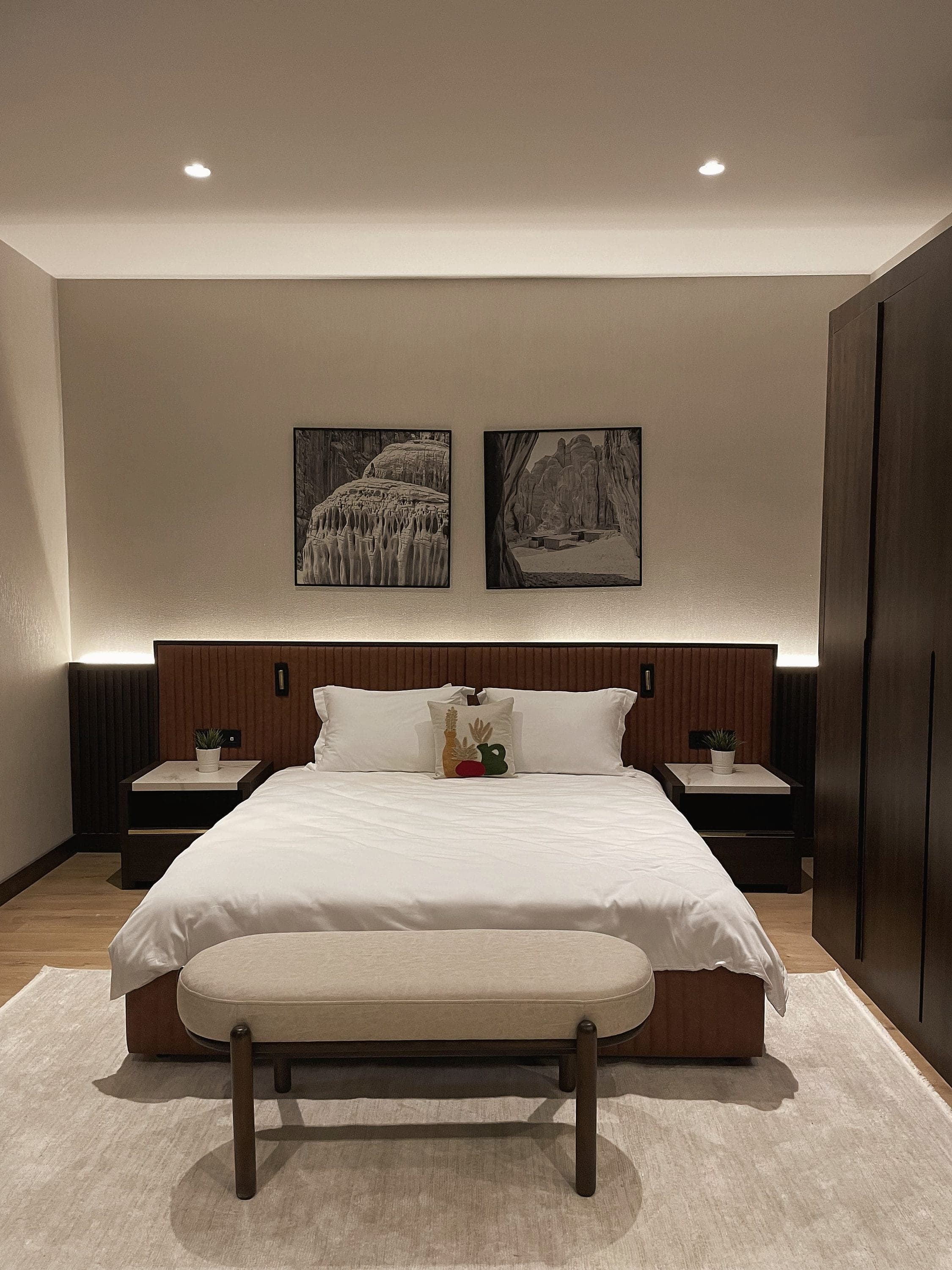
On 10 September 2026 Hyatt announced a franchise agreement with an affiliate of CL Capital for the 130-room Oxford Witney Hotel, to be operated by InnPractice and to join JdV by Hyatt by the end of the year, the brand's first hotel in the United Kingdom. That is one conversion. IHG's own Americas figures show the other direction at scale: 5,166 Holiday Inn rooms left the system in 2025 against 1,427 opened, and a further 1,555 in the first quarter of 2026. Rooms leave flags, join collections, and re-flag, and each move lands on the furniture. This page is about what the room keeps through the move, what a collection brand's book still asks for, and which pieces carry the identity an independent is buying.
What the room keeps, what the book changes
| In the room | When the flag comes off | When a soft brand goes on |
|---|---|---|
| Wardrobe, desk, nightstand and vanity carcasses | Stay, if sound at the base and the hardware. Doors and tops are where a new identity is put on them. | Stay. A collection brand's book governs performance and finish grades, not the carcass. |
| Bed base and headboard | The base stays. The headboard is the first identity piece to change: it is the wall a guest photographs. | The base stays; the headboard is re-designed to the hotel's own concept and built to the book's fire and durability lines. |
| Seating | Frames stay where they are sound; covers and foam are replaced to the fire standard the market names. | The same, with the fabric grade the book specifies. |
| Soft goods: carpet, window treatments, wallcovering, lamps, bedding | Replaced. This is where the old flag's palette lived. | Replaced to the hotel's concept; the book sets the performance line. |
| The pieces that carried the brand | Removed: branded signage, the flag's specified accessories, any item whose design belonged to the brand book. | Replaced by the hotel's own, which is the point of the collection. |
What a collection brand's contract still asks for
Marriott's 2024 franchise disclosure for Autograph Collection describes the identity side in one sentence: “A hotel joining the Autograph Collection will retain or create and utilize its own name, logo, and brand concept along with its designation as a member of the Autograph Collection.” The same document describes the standards side with equal plainness. The owner “must use only such furniture, fixtures, and equipment (“FF&E”)… that conform to our product quality standards”, must “accomplish a significant renovation… including the replacement of soft goods FF&E, and case goods FF&E periodically”, and should expect that purchases “through us, our affiliates, approved suppliers, or subject to our standards and specifications will represent approximately 80% to 90% of the total cost” of establishing the hotel, land excluded.
Hilton describes Curio the same way to owners in its EMEA development brochure: “Simplified brand standards that allow hotels to maintain their unique identity while ensuring a degree of consistency for the customer”, with “access to Hilton tools, resources, support, and Hilton Supply Management, including fire, life and safety standards”. HVS's U.S. Franchise Fee Guide calls these “independent collection” brands and says they “have lenient programming and design standards” and leave the owner “nearly total control of… creative design elements”. Lenient is the word the fee guide chose; the fire, durability and dimension lines are the part that stays strict, and they are the lines a factory builds to.
The twelve-month clock on a conversion
A conversion arrives with a PIP and the PIP arrives with a date. Marriott's Autograph disclosure charges a property improvement plan fee of $16,000 “to review the hotel to determine the renovations necessary to bring the hotel into good repair and to conform the hotel to Marriott's then-current standards”, and adds: “PIPs are effective for a period of 12 months after issuance.” Hilton's 2026 disclosures charge $0 to $10,000 for the same document on a conversion or re-licensing. The list is written once, priced against the building as it stands, and it ages.
Twelve months is the window inside which the furniture decisions are made, sampled, approved in a model room, produced and delivered. On the Witney conversion the refurbishment was already under way when the franchise agreement was announced and the brand joins at the end of 2026. The sequence at the bench is the same whichever direction the flag moves: survey what stands, sort it into kept and replaced, build one room, release the floor.
The pieces that carry a hotel's own identity
An independent, or a hotel joining a collection, is buying identity rather than compliance, and identity in a guest room lives in five pieces: the headboard wall, the desk and its chair, the lounge seating, the lighting, and the material the hand touches at the nightstand and the vanity. STR's definition, as Hotel Management reports it, is that a soft brand “can provide hotel operators with lower costs and added flexibility when compared with standard franchise agreements”; the flexibility is spent on those five pieces. The Highland Group's Boutique Hotel Report 2024 counted 601 hotels with 101,452 rooms in fourteen US soft-brand collections, and CBRE's 2025 analysis of 4,200 hotels found soft brands paying the same three franchise-related fees as core brands. The furniture is where the two arrangements differ.
Made to the hotel's own drawings, those five pieces are a custom programme: a veneer chosen for one property, an upholstery cut for one lobby, a headboard that exists nowhere else. Built to a collection brand's book, they carry the book's fire and durability lines underneath the same drawings. The carcasses behind them, if they were built square and sound the first time, do not need to know which flag is on the building.
Asked most
- What happens to the furniture when a hotel de-flags?
- The carcasses, bed bases, joinery and sound seating frames stay. The soft goods, the headboard panel, and every piece that carried the brand's identity or belonged to its book are replaced. The sort is made room by room before the quotation.
- Does a soft brand still have furniture standards?
- Yes. Marriott's Autograph Collection contract requires FF&E that conforms to its product quality standards, periodic replacement of soft goods and case goods, and states that 80% to 90% of the cost of establishing the hotel is subject to its standards or approved suppliers, while letting the hotel keep its own name, logo and concept. HVS's fee guide describes collection brands' design standards as lenient, and the fire and durability lines are the strict part.
- How long is a conversion PIP valid?
- Marriott's Autograph disclosure states that PIPs “are effective for a period of 12 months after issuance”. Hilton's 2026 disclosures charge $0 to $10,000 to prepare one on a conversion or re-licensing. The furniture programme is planned inside that window.
Related
Leaving a flag, or joining a collection?
Send photographs of one room and the concept, or the collection brand's book if there is one. We tell you what the room keeps, design and build the five identity pieces to your drawings, and sample them before a floor is touched.
Send the BOQ. Get a factory-direct number