
Reference
Factory-direct, agent or dealer
Hotel FF&E is bought through three structures. A purchasing agent buys on the owner's behalf for a disclosed fee and takes no ownership of the goods; a dealer takes title and earns its margin inside the selling price; buying factory-direct puts the contract on the factory's own number. One question sorts any firm on a shortlist: who takes title, and where does the compensation come from. Each structure wins somewhere, and this page says where.
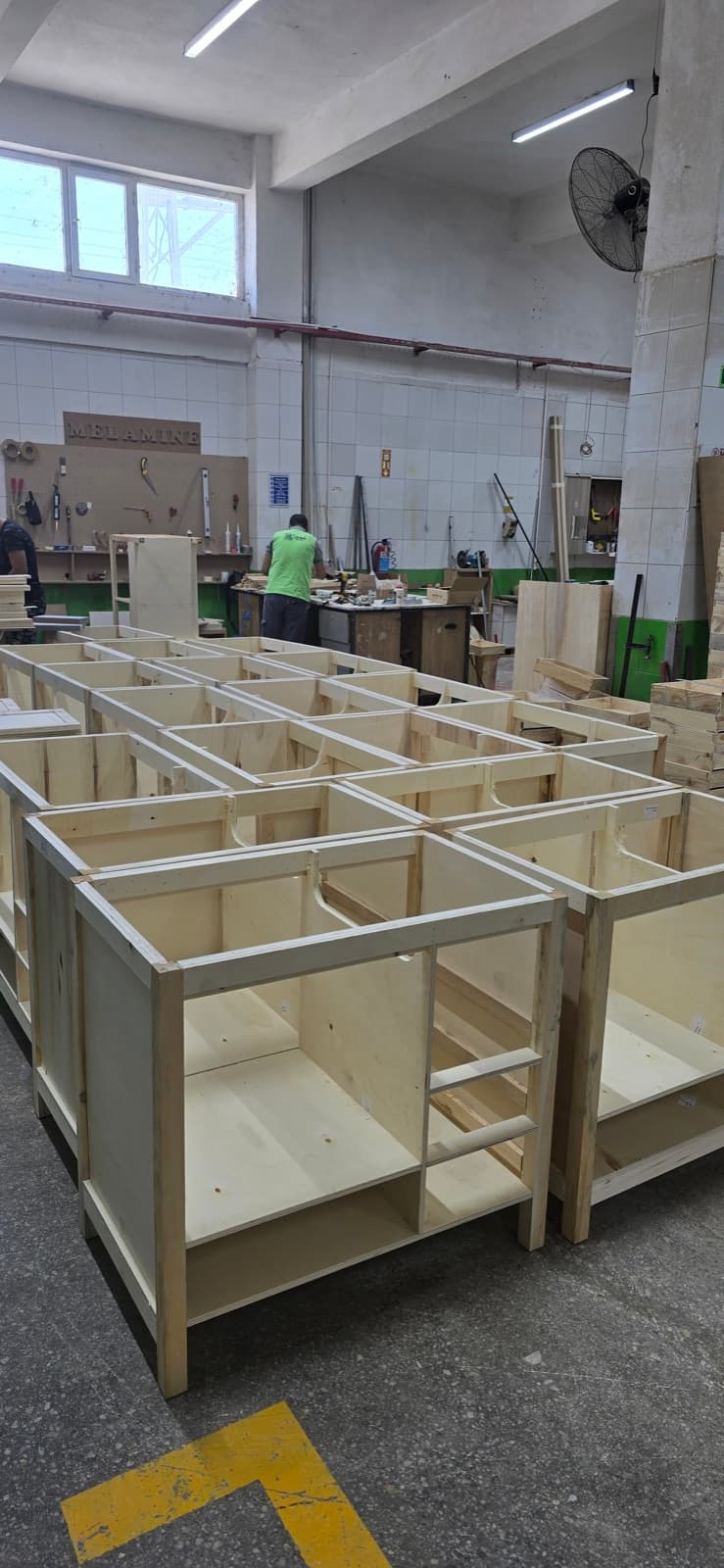
Every guide to buying hotel FF&E is written by someone selling one of the three ways to buy it. Procurement firms publish the case for procurement firms, dealers publish the case for single-source packages, and factories, including this one, publish the case for buying direct. This page separates the three structures using the firms' own published words, because the structures are genuinely different and each is the right answer to a different project. The disclosure first: we are the factory in this comparison. The other two lanes are quoted from their own pages, so every claim about them can be checked at source.
The three structures, side by side
Read the money column first. Where a firm's compensation sits determines what it can and cannot do for you, and it is published: the agent quotes and the dealer description below all come from the firms' own sites.
| The route | Where the money sits | What it owes you | What that buys |
|---|---|---|---|
| Purchasing agent | A disclosed fee paid by the owner. Benjamin West, which calls itself a fiduciary purchasing agent, states it in one line: "Our disclosed fee is our sole source of compensation" | A duty to the owner. It bids, levels and expedites on your side of the table, and shows you the manufacturers' own prices | A run programme: bid package, vendor qualification, purchase orders, expediting, freight, receiving and punch list, across every category at once |
| Dealer | The margin inside the selling price. The dealer buys from factories, takes title to the goods, and resells them as its own package | A contract of sale. One counterparty who owns the goods until you accept them, with stock, credit and parts behind it | One order and one invoice for a package assembled from many factories, often shipped from a domestic warehouse |
| Factory-direct | The factory's own price. No fee and no resale margin sit on top of the number for the manufactured scope | A manufacturing contract. Drawings, samples, a model room, production and loading, against your specification | The maker's own account of what it can build, and revisions that move through one shop |
What does a purchasing agent actually do?
An agent spends the owner's money and never owns the goods. Benjamin West describes itself as a fiduciary purchasing agent and publishes the sentence that defines the model: "Our disclosed fee is our sole source of compensation." R-W Purchasing Partners states the same structure from its own page: it "charges a flat fee for services and has never accepted manufacturers' rebates or discounts," and puts more than $6.8 billion of procured furnishings over 39 years behind that model.
Nicole Schmidt, founder of the purchasing firm Source, put the reason to HotelBusiness plainly: "we use a vendor-direct, flat-fee model, so clients see manufacturer pricing and our fee as separate numbers instead of a blended markup." That sentence is what an owner is buying. The manufacturers' own numbers sit on the table, and a professional runs the bid, levels the quotations, polices the submittals and expedites the factories, for a fee both parties can read.
The structure has one consequence worth understanding before you shortlist anyone. A firm compensated only by the owner's disclosed fee cannot also be the seller of the goods; selling the owner its own product would put it on both sides of its own negotiation. We read the published sites of roughly fifty US hospitality purchasing firms in August 2026, and the two vocabularies never met: firms describing themselves as fee-based agents published no manufacturing capability, and every manufacturing claim sat with firms that take title and resell.
What does a dealer's margin buy?
A dealer takes title. It buys from factories at trade terms, owns the goods, and sells you a package under one contract of sale, with its margin inside the price. MDM Commercial, a single-source FF&E vendor, makes the pitch in its own December 2025 article: "one team, one workflow, and one clear source of truth for your entire FF&E package."
That structure buys four real things. Stock, because a warehouse ships what a factory would first have to build. Credit, because the dealer finances goods it owns. Consolidation, because one invoice can cover casegoods, seating, lighting and artwork drawn from many factories. And an aftermarket, because the firm that sold you two hundred nightstands is the firm you call about the two that arrive damaged.
Some dealers also manufacture. Hospitality Designs, a North American supplier, writes that it is "one of the few hotel furniture manufacturers that builds its own casegoods right here in North America." A dealer that owns production sits in two rows of the table above at once, which is a legitimate structure, and one more reason to sort firms by the title question rather than by what their names sound like.
Who actually makes the furniture?
"Manufacturer" covers three different structures in this market, and firms will tell you which one they are if the question is asked precisely. Some own the plant. Some manufacture through partners: BermanFalk, a Canadian hospitality furniture company with over 30 years of manufacturing experience, describes that model on its own About page: "While we utilize trusted global manufacturing partners, our own on-the-ground teams directly oversee every stage of production in Asia." And some are traders whose manufacturing exists only in the brochure.
The first two are honest structures; the third is the one buyers get burned by. What separates them is the precise question: in which building do your machines stand, and whose name is on its capacity report? For Turkish suppliers the answer can be verified from outside, down to free registry lookups a stranger can run from a tax number, and that verification lane has a page of its own on this site.
Our own answer, since this page will be read as a claim about us too: a 5,000 m² production floor in Gemlik, Bursa, under our own production management, with machining, veneer, spraying and upholstery in one building, and a 350 m² showroom with 8 model rooms on the same site. The delivered programmes are named with the operator, the city and the scope on their own pages. Marriott Belgrade carries the one quantity, approximately 1,500 pieces across two custom guestroom types and the restaurant, built to a client's specification, because building to someone else's drawings is the shape of most factory work in this trade.
When does each route win?
The agent wins on breadth and on brand process. A renovation that spans casegoods, seating, lighting, carpet, artwork and operating supplies is a hundred purchase orders across dozens of vendors, most of which the owner will never buy from again, and running that through one fee-based professional is what the fee is for. Beyer Brown, itself a purchasing agent, publishes the figure that makes the case: on its projects, the average time from the start of specification review to a model room installed runs around six months, which is a stretch of programme an owner's own staff rarely has capacity to carry.
The dealer wins on speed, stock and small packages. A forty-key refresh of standard pieces needed inside a season is a warehouse problem; so are replacement parts across a portfolio, and so is a package too small or too scattered to fill a factory's production run. The dealer also wins where the buyer wants a domestic counterparty holding importation, credit and warranty inside one contract of sale.
Factory-direct wins where the scope is custom and the volume is real. When a property's package is drawn rather than picked from a catalogue, the factory is doing the engineering either way, and contracting it directly puts the drawings, the samples, the model room and the price on one table, with nothing standing between the buyer and the people cutting the parts. The trade-off is honest: the buyer, or the buyer's agent, carries the work a dealer's margin or an agent's fee would otherwise buy. The routes also combine, and the combination is the normal shape of a large branded programme: a purchasing agent buying factory-direct on the owner's behalf.
The one question that sorts any firm
Ask it in writing and keep the answer: do you take title to the goods, or do you buy as our agent for a disclosed fee? Every firm in this market can answer in one sentence, and both answers are respectable. What the answer changes is which comparison you run next.
If the answer is a fee, compare the fee against the cost of your own time, because what you are buying is a run programme and an advocate; the goods will be priced by factories either way. If the answer is title, compare the delivered price against a factory's number plus the freight, customs and project management you would be taking on yourself, because the margin is buying you stock, credit and one accountable counterparty. If the answer is still unclear after one written question, that is also an answer.
One more thing the published record shows: the agent lane is consolidating. Project Dynamics, a purchasing firm, has been absorbed by Source; its old domain now redirects to Source's own page for the firm, and Source announced a corporate-development role in September 2025 to run further deals. Fewer, larger agents make the one-question screen more useful rather than less, because the structures stay the same while the names on them change.
Where we sit in this map
We are the factory. All three routes pass through factories in the end: purchasing agents put factories on bid lists and ask for net prices, which is a request we answer in writing; dealers and manufacturer-by-partner programmes carry factory output under their own names; and owners and studios contract the factory directly. This page argues for the structure being understood and the comparison being run honestly, because a factory does fine under any of the three when the package actually suits it.
The evidence rule this page runs on
Every sentence about another firm on this page is that firm's own published line, quoted with its name in the same passage, and the one press-mediated quote carries its reporter's name beside it. Our own numbers are the confirmed ones: the floor, the showroom, the model rooms, the Belgrade piece count. Weigh the other two lanes in their own words at source, and weigh ours in Gemlik, standing in the building.
Asked most
- What is the difference between an FF&E purchasing agent and a dealer?
- Title and compensation. An agent buys on the owner's behalf, never owns the goods, and is paid a disclosed fee; Benjamin West, a fiduciary purchasing agent, states that its disclosed fee is its sole source of compensation. A dealer buys from factories, takes title, and resells the goods with its margin inside the price. Both are legitimate. They are different contracts, and they answer different problems.
- Is buying factory-direct cheaper?
- On the manufactured scope, no resale margin sits in the number, and on custom work the factory was doing the engineering anyway. The comparison has to include what the missing structure was buying: an agent's fee pays for bid levelling, expediting and an advocate; a dealer's margin pays for stock, credit, importation and one accountable seller. Factory-direct is the better number when the package is large enough and custom enough that those services are work you were carrying anyway. For a small catalogue order needed from stock, the right counterparty is a dealer's warehouse.
- Can a purchasing agent sell me its own furniture?
- A fee-based agent sits on your side of the table, and the firms that run that model say so themselves: R-W Purchasing writes that it has never accepted manufacturers' rebates or discounts. A firm selling you goods it owns is acting as a dealer in that transaction, whatever its name says. Neither structure is wrong. What matters is knowing which one you are in, and one written question settles it: do you take title, or do you buy as our agent?
- How do I know whether a "manufacturer" owns its factory?
- Ask which building the machines stand in and whose name is on the capacity report, then verify rather than accept the answer. Some firms manufacture through partners and say so plainly, as BermanFalk does about overseeing partner production in Asia; some own the plant; some are traders. For Turkish suppliers the check is free and public: registry numbers a stranger can resolve, and a chamber-issued capacity report naming the inspected factory. The vendor-qualification guide on this site walks through it check by check.
- Which route fits which package?
- A small, standard package needed inside a season fits a dealer's warehouse. A programme spanning many categories and dozens of vendors, with no procurement staff on the owner's side, fits an agent, and that agent will often buy the manufactured scope factory-direct on your behalf. A package that is drawn rather than picked, at a volume that fills production runs, fits the factory. Those are the same boundaries the other two routes should be drawing for you.
Related
Pricing a package, whichever route it takes?
Send the specification or the drawing set and a net price comes back in writing, to you or to your purchasing agent. Or come to Gemlik and walk the floor on a working day; the showroom is on the same site.