
Reference
Brand standards, from the factory side
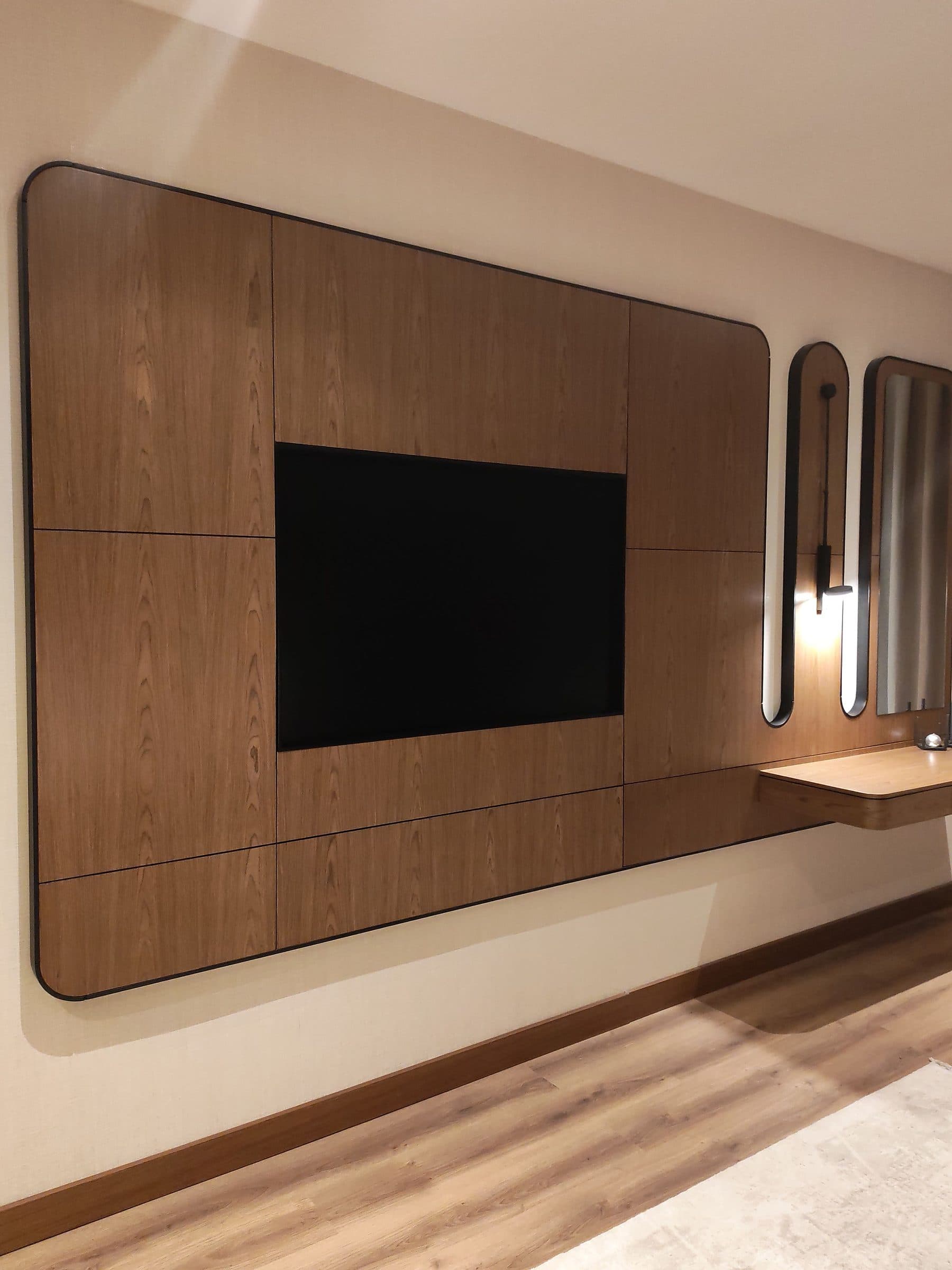
We have manufactured to six operator standards: Accor at Mövenpick Istanbul, Hilton at Garden Inn and DoubleTree in Jeddah, Marriott in Belgrade, Rotana in Georgia, IHG at Holiday Inn Al Khobar, and Ascott at Citadines. From the buying side a brand standard looks like a book of rules. From the bench it is a sequence of gates, and the gates are nearly the same across flags — what differs is who signs at each one, how deep the paperwork runs, and which national standards the book points at. This page describes the gates as we run them.
What a brand standard actually is
The flag's mandatory design and performance specification: durability grades, fire performance, dimensions, anti-tip restraint, electrical listings, acoustic ratings — guestroom entry doors typically carry an Rw 30–35 dB requirement, to name one line of hundreds. The standard binds the owner, who must build to it to keep the flag. It reaches us as the specification behind the designer's drawings, and our job is to price it line by line and build to the letter of it. A supplier meeting a brand book for the first time discovers most of its cost in the lines nobody quotes: the restraint hardware, the listing on the minibar circuit, the sample count.
And what a PIP is, since the internet gets it wrong
A PIP is a Property Improvement Plan: the renovation scope a brand hands an owner as the price of keeping or taking the flag. It is the single most common trigger for an FF&E order that arrives with a deadline already attached. We have watched an answer engine define PIP as "plan, install, pilot" — it is not that, and a buyer who says PIP means the brand-mandated renovation list.
The delivered programmes
Named, not implied. Ask which property, which scope — a reference you can call is worth more than a logo wall.
| Operator standard | Programme | City |
|---|---|---|
| Accor | Mövenpick Istanbul | Istanbul, Türkiye |
| Hilton | Hilton Garden Inn · DoubleTree by Hilton | Jeddah, Saudi Arabia |
| Marriott | Marriott Belgrade — ≈1,500 pieces | Belgrade, Serbia |
| IHG | Holiday Inn Al Khobar | Al Khobar, Saudi Arabia |
| Rotana | Rotana Georgia | Georgia |
| Ascott | Citadines serviced apartments | Istanbul, Türkiye |
The gates, in the order they arrive
- The submittal
- Shop drawings, material samples, the hardware schedule and cut-for-approval fabrics travel as one package. It comes back stamped approved, approved-as-noted, or revise-and-resubmit — and production releases on the stamp, not on the purchase order. A factory that starts cutting before the stamp is gambling with the buyer's programme.
- Control samples
- Finish, fabric and hardware are signed off physically before any room is built. We would rather cut a second sample than argue about whether the first was close enough — the sample is cheap and the argument never is.
- The model room
- One complete room, built early, approved by owner, brand and designer together. The approved room becomes the contractual benchmark: every room after it is measured against the room, not the drawing, and changes get minuted. Winning the model-room stage is winning the project.
- Production discipline
- Most contracts carry a drift clause: production must match the approved samples and model room, and the buyer may reject drift. Our side of that clause is locking the recipes after approval — lacquer codes, stain formulas, foam suppliers — so month six matches month one.
Who actually buys the furniture
Rarely the brand. Under a franchise or a soft-brand agreement — Autograph, Curio, Tapestry — the operator supplies flag, standards and distribution while the owner keeps the FF&E budget, so the furniture decision sits at the owner's head office. Day to day, demand reaches manufacturers through purchasing firms and design studios rather than through the flags. The brands' own supplier portals — Hilton Supply Management, Accor's ASTORE — are real doors and free to register, but they are passive rosters, not order books. We treat them as table stakes and put the effort where the decisions happen.
What actually differs between flags, from the bench
Less than the books suggest, and in predictable places. The gate sequence is the same everywhere. What moves between programmes is the depth of the submittal file, the number of physical samples before sign-off, which national fire and durability standards the book points at for that region, and how much of the specification arrives already engineered versus left to the factory's shop drawings. A programme in the Gulf and a programme in the Balkans can carry the same flag and read like two different books. This is why we price from the specification in front of us, and why a question this page cannot answer gets answered per project, in writing.
Asked most
- What is a PIP in hotels?
- A Property Improvement Plan: the renovation scope a brand requires from an owner to keep or take the flag. It is a brand-mandated list with a deadline, and it is one of the most common triggers for an FF&E order.
- Does the hotel brand buy the furniture?
- Usually not. Under franchise and soft-brand structures the owner keeps the FF&E budget and the buying decision; the brand sets the standard the furniture must meet. Purchasing firms and design studios run most of the buying in between.
- Are you an approved supplier for these brands?
- We claim delivered work, not approval status: we have manufactured to Accor, Hilton, Marriott, IHG, Rotana and Ascott standards on the named programmes above. Ask us which property, which scope — and for a reference you can contact.
Related
Pricing against a brand book?
Send the specification and the drawing set. We price it line by line and come back with a factory-direct number and the questions worth settling before the model room.