
United Kingdom
Into the UK, origin has to be proved.
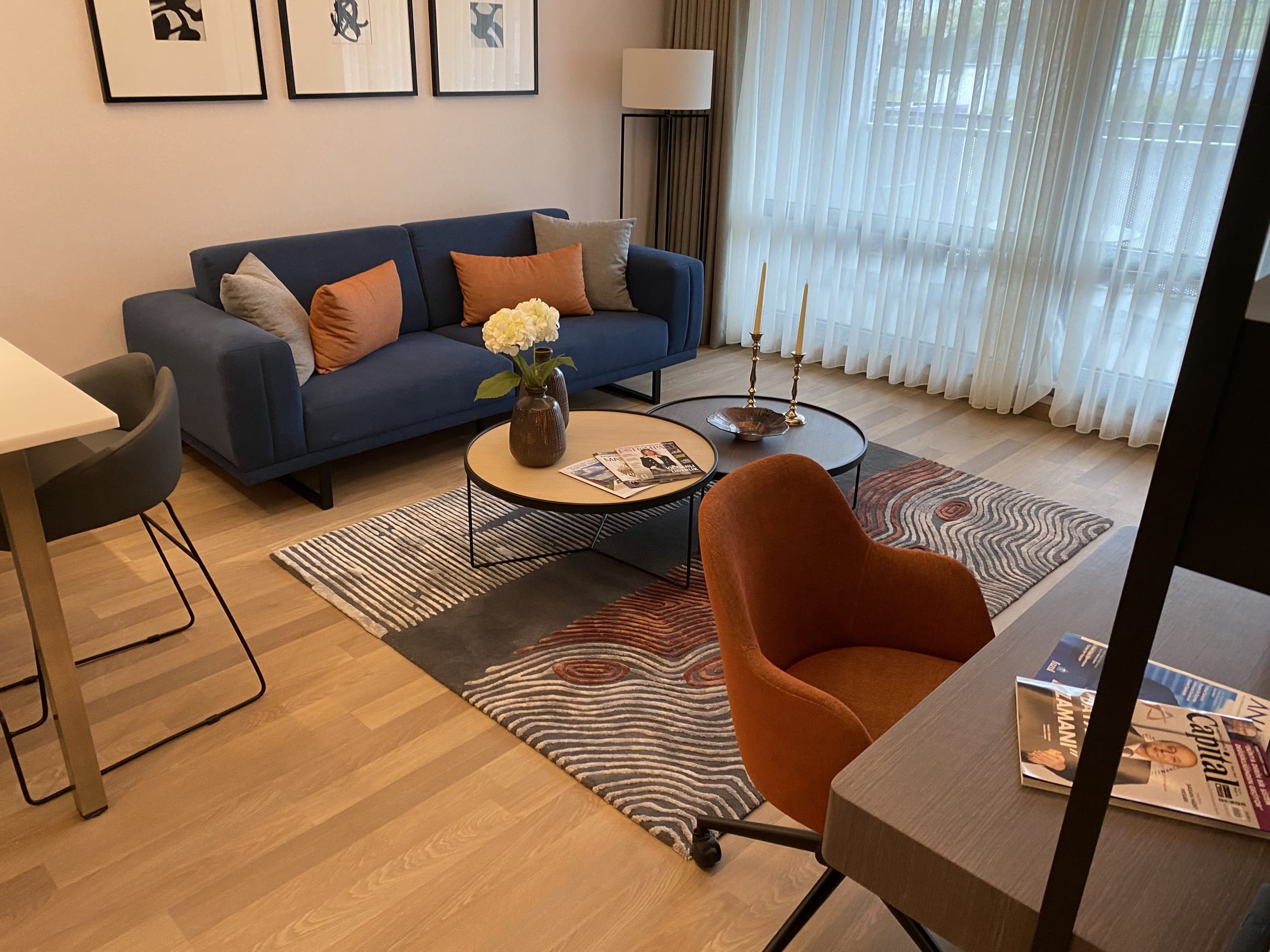
We manufacture hotel interiors in Gemlik, Bursa — guestroom casegoods, architectural joinery and upholstery, with soft furnishings and lighting supplied in the same package and installation managed by us on site. A UK project differs from a European one in exactly one structural way, and it is the way most suppliers get wrong in the first meeting: the United Kingdom is outside the EU–Türkiye customs union, so an A.TR does nothing here and origin becomes a calculation somebody has to actually run.
The document, and the one everybody sends by mistake
A EUR.1, or an origin declaration on the invoice
Preferential treatment into the UK runs on a proof of origin — a EUR.1 movement certificate, or an origin declaration made out on the invoice. Under the revised rules exactly two proofs exist; the older third form is retired, and a supplier still naming it is quoting a rule set that has lapsed.
An A.TR is the wrong document here
A.TR proves free circulation inside the EU–Türkiye customs union. The UK is not in it. If a broker asks us for an A.TR for a Manchester delivery, the correct answer is that the instrument is a EUR.1 — and getting that right in the room is worth more than any duty figure.
Small consignments need no EUR.1 at all
Below the low-value threshold, any exporter may make out an origin declaration on the invoice without a certificate. It matters for sample shipments and for a single replacement piece, which is exactly when the paperwork usually gets improvised.
A EUR.1 has a shelf life
Ten months from issue under the revised rules — and note it is a different clock from the A.TR's four months. Phased hotel deliveries running across a long programme are where that difference turns into a problem nobody planned for.
What proving origin means for furniture
Chapter 94 — seating, other furniture, mattresses, lighting — carries a list rule with two branches, and the revised text is explicit that the exporter chooses which one to use, consignment by consignment:
Branch one — change of heading
Manufacture from materials of any heading except that of the product itself. A wardrobe of 9403 built from board, hardware and finishes that are not themselves 9403 satisfies it, whatever those inputs cost and wherever they came from.
Branch two — the 50% value cap
Or: manufacture in which the value of all materials used does not exceed 50% of the ex-works price of the product. This is the branch that survives bought-in components sitting in the same heading.
The tolerance trap: 50 plus 15 is not 65
The 15% tolerance for non-originating materials cannot be used to exceed a percentage already set in the list rule. So it helps on the change-of-heading branch — a bought-in chair frame of 9401 going into a chair of 9401 — and buys nothing at all on the 50% branch. Suppliers who add the two together are working to a number that does not exist.
Which is why the specification changes the answer
The same wardrobe can pass on one branch and fail on the other depending on the board, the hardware and the finish specified. Origin is decided at material approval, alongside the fire standard — not discovered at the border.
Where we stop and your broker starts
We do not publish a UK duty rate, because the applicable rate turns on the ten-digit line and the rule set in force for that lane, and rule sets move by administrative notice rather than by legislation. What we do is manufacture to a specification whose origin position we have run, raise the proof of origin, and hand your broker the arithmetic behind it so it can be checked rather than trusted. Anyone quoting you a firm UK landed rate without having seen the bill of materials is quoting a number they cannot defend.
Who does what at the border
You or your customs agent are the importer of record; we quote DAP to the named place. Two facts sit behind that. A non-established taxable person has no UK VAT registration threshold — registration is mandatory on any UK taxable supply, with no small-supplier exemption — and once registered, postponed VAT accounting avoids financing import VAT at the border, which is the mechanism that keeps a hotel programme's cash flow intact. Whether a non-established seller can nonetheless be named importer while an established agent lodges the declaration is a live question we have not closed, so we do not sell against it. We manufacture, export-clear at Gemlik, raise the origin proof, carry the freight, and manage the installation through to a finished room.
BS 7176, and the sentence specifiers get wrong
A UK hotel specification will call up BS 7176. A bedroom is medium hazard: EN 1021-1 (cigarette), EN 1021-2 (match) and BS 5852 ignition source 5 — the 65 mm wooden crib usually written as crib 5. Public-area and bar seating in the same property is routinely specified higher, so the FF&E schedule and the category table disagree more often than they agree. The sentence worth having exactly right: BS 7176 compliance is a manufacturer's declaration supported by test evidence on the composite as built, not a certificate issued by a body — so it is engineered at material approval and it lapses the moment a fabric is substituted.
Fire-rated upholstery: how it is actually certified →How a UK project runs
BOQ and drawings
Your bill of quantities and the architect's drawings.
Origin position run early
The bill of materials assessed against both branches of the list rule, so the proof of origin is a decision rather than a hope.
Standards named up front
Hazard category, ignition sources, strength level — fixed before production, because they are build-up decisions.
Model room
Built and approved before the line opens. Eight stand permanently in our showroom in Gemlik.
Production and QC
Under our own production management in Gemlik.
EUR.1 and delivery
The proof raised per consignment, containers sequenced and labelled by room number, DAP to the named place, installation managed by us on site.
Common questions
- Can you send an A.TR for a UK delivery?
- We can raise one, but it would not do anything for you. The UK is outside the EU–Türkiye customs union, so the instrument is a EUR.1 movement certificate or an origin declaration on the invoice.
- What duty will we pay?
- It turns on the ten-digit line and the rule set in force for that lane, and we do not publish a figure we would have to defend on every consignment. Send the bill of quantities and we will run the origin position; your broker confirms the rate against it.
- Does it matter where your board and hardware come from?
- For the UK, yes — unlike an EU delivery, where an A.TR settles it and component origin never enters the calculation. Chapter 94 gives an exporter's choice between a change of heading and a 50% value cap, and which one a product passes on depends on what the specification names.
- Can you meet crib 5?
- Name it in the specification and the build-up is engineered to meet it, with the evidence produced against the approved composite. In a BS 7176 medium-hazard package crib 5 sits alongside EN 1021-1 and EN 1021-2.
- Will you be the importer of record?
- No — we quote DAP and you or your customs agent lodge the entry. A non-established company has no UK VAT registration threshold and the naming question for a non-established importer is unresolved, so we do not sell a capability we would have to discover mid-shipment.
- Have you delivered in the UK?
- Not yet. Our delivered programmes are in Saudi Arabia, Serbia, Georgia and Türkiye, and we would rather say so than let a flag imply a customs history we do not have.
- What are your lead times?
- Set per project against scope and materials, and fixed in the offer together with the delivery date.
Send the BOQ.
A bill of quantities or a drawing set is enough to start. We come back with the scope we cover, the origin position we would run, and what the first room takes to build.